Achieving a healthy, radiant complexion requires a balanced approach to skin health. While daily habits such as cleansing, moisturizing, and applying sun protection build a necessary foundation, at-home products can only penetrate so far into the layers of the skin. Over time, factors like aging, sun exposure, environmental pollutants, and natural cell turnover slowdown can lead to persistent concerns that topical creams struggle to resolve on their own. Incorporating professional clinical care alongside daily maintenance creates a powerful synergy. Understanding how advanced clinical procedures and everyday regimens work together allows individuals to maximize their investment in skincare and enjoy long-lasting, visible results.
A consistent at-home skincare routine acts as the daily defense system for your skin barrier. High-quality cleansers clear away surface oils, makeup, and environmental debris, while targeted serums deliver active ingredients like antioxidants, peptides, and retinoids to address specific concerns. Daily application of broad-spectrum sunscreen protects against ultraviolet radiation, which is responsible for the majority of premature aging signs. However, even the most potent over-the-counter or medical-grade topical formulations are designed to work primarily on the outermost layer of the epidermis. They keep the skin hydrated, protected, and properly exfoliated on a surface level, but they cannot reach the deeper dermal structures where collagen production and cellular renewal take place.
This structural limit is where professional clinical care becomes essential. Specialized therapies utilize advanced medical technology to access deeper tissue layers, encouraging structural renewal from within. Procedures such as microneedling, chemical peels, lasers, and hydradermabrasion work by creating controlled, beneficial micro-injuries or deeply exfoliating stagnant cellular buildup. These processes stimulate the body natural healing response, boosting collagen and elastin production while accelerating cell turnover. Visiting a trusted med spa in Weatherford, TX allows individuals to access personalized clinical treatments that target deep-seated pigmentation, fine lines, structural laxity, and stubborn texture issues that daily products simply cannot transform alone.
The relationship between professional treatments and daily care is reciprocal. A diligent at-home regimen thoroughly prepares the skin before a clinical session, optimizing overall outcomes and reducing the potential for adverse reactions. Skin that is well-hydrated, balanced, and accustomed to active ingredients like antioxidants or gentle exfoliants recovers more efficiently following clinical procedures. Conversely, immediately following a professional treatment, the skin’s ability to absorb topical products increases significantly. Because clinical procedures remove dead surface cells and clear blocked pores, high-performance serums and moisturizers can penetrate more effectively, delivering essential nutrients straight to newly refreshed cells.
Furthermore, daily skincare is vital for maintaining and extending the results achieved through clinical interventions. After undergoing a procedure that stimulates collagen or evens out pigmentation, using targeted topical products helps preserve those improvements over time. For instance, incorporating vitamin C serum in the morning neutralizes free radicals that degrade freshly stimulated collagen, while a retinoid at night supports ongoing cellular renewal between appointments. Without proper daily maintenance, environmental stressors and natural aging processes will quickly erode the progress made during clinical sessions. Establishing a routine with a reliable med spa in Weatherford, TX ensures that clients receive tailored guidance on which home products will best protect their investment after every service.
Customization plays a central role in successfully blending these two aspects of care. Skincare is never a one-size-fits-all endeavor, as individual skin types, sensitivities, and goals change over time and across different seasons. Professional practitioners evaluate skin condition at a structural level, identifying underlying issues like sub-surface sun damage or compromised barrier function that might not be visible to the untrained eye. Based on these observations, specialists can adjust both in-office treatment plans and home care recommendations. This collaborative approach ensures that home products support clinical goals rather than working against them, preventing issues like over-exfoliation or accidental barrier damage.
Timing and product selection post-treatment require careful attention to support proper healing. Immediately following clinical procedures, the skin barrier is often temporarily delicate or heightened in sensitivity. During this phase, aggressive at-home actives like strong acids or retinoids must be paused in favor of soothing, hydrating, and barrier-repairing ingredients such as hyaluronic acid, ceramides, and gentle physical sunscreens. Once the healing phase concludes, active ingredients can be reintroduced to build upon the momentum generated by the treatment. Professional guidance helps navigate these transitional phases smoothly, ensuring the skin remains protected while achieving optimal restoration.
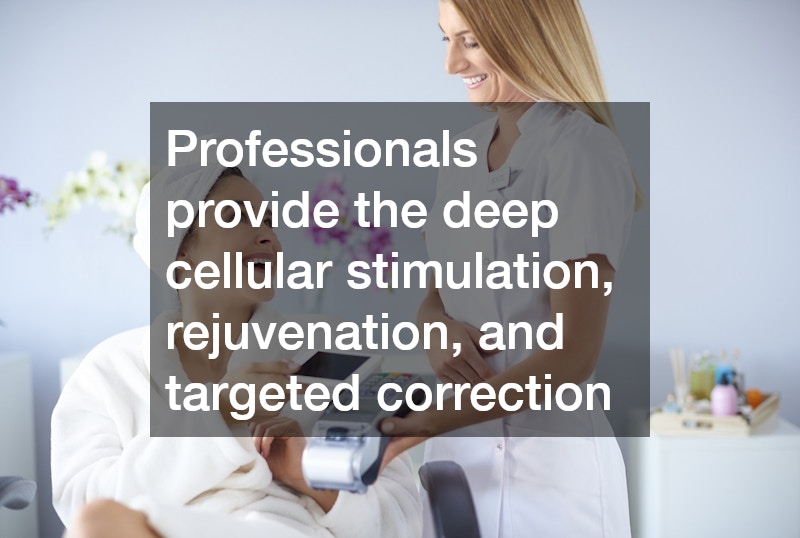
Ultimately, viewing daily maintenance and professional clinical services as partners rather than alternatives leads to the healthiest skin outcomes. At-home products provide essential everyday nourishment, surface hydration, and protection against environmental stress, maintaining a healthy base. Professional treatments provide the deep cellular stimulation, rejuvenation, and targeted correction required to address structural aging and persistent skin concerns. By combining a disciplined daily routine with periodic professional care, individuals can achieve a balanced, vibrant complexion that stays resilient, youthful, and healthy across every season of life.